Blog

Your blog category

From Forest Rights to Forest Futures

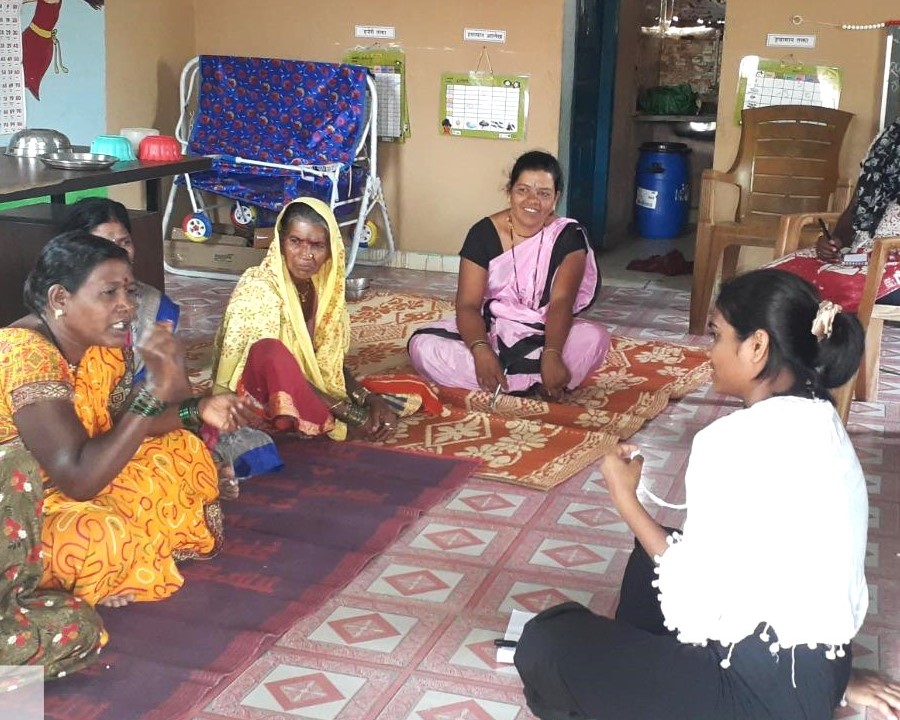
Some projects leave behind reports. This one will leave footprints too. In the hills. In the hearts.  It’s not just a checklist for us, it’s a lived, breathed journey of sweat and stories. Not just a conservation project. Not just a forest rights process.   It’s a change voiced by communities who have lived with the forest for generations.  This is the story of how we are bringing the Community Forest Resource Management Plan (CFRMP) to life, across 160 in collaboration with the Government. Through timelines that felt tight, with teams who worked longer than hours could measure.  A Web of Villages  Each village came with its own rhythm, some more ready, some more hesitant, each shaped by history and land memories. We didn’t impose. We listened. To understand. And then, to co-create.  We have visited over 50 villages so far across 3 blocks. More 110 to go. Some had already received their CFR titles, others were still waiting. All of them needed guidance to begin the long, often overwhelming task of planning how to manage and conserve their forest land.  The Power of People in the Field  Our field teams have – Ecologists, community mobilisers, GIS specialists, operations staff, volunteers, seniors! Not clock in and out. Some working 12-14 hours a day during peak periods.   Morning hours were for community discussions, afternoons for site assessments, evenings for compiling GPS points, species lists, and data notes. And yes, update meetings, no escapes through that.   In villages with no phone network, coordination meant walking to the next hill.   Meetings were sometimes postponed because elders were out grazing cattle or farm works.  New Government appointments.  Messages lost in-between, at times.  KML files not available.   Patience. Follow ups. Showing up without giving up.   Yet not once did the team say, “this is too hard.”  It never felt like a job. It was a shared responsibility.  Gram Sabhas That Stir Us  The most unforgettable moments came during Gram Sabha consultations.   Women who had never spoken in public stood up to share their opinions. Youths were ready to be the leads. Elders walked with us to identify sacred groves and grazing patches, tracing memory and geography with a single hand.  Each Gram Sabha was something more, something different, something that always enriched us to move on.   Volunteers and Unseen Heroes  None of this would’ve been possible without the quiet strength of volunteers, youth from College of Social Work, local teachers, even ASHA workers who helped gather people. They carried charts, fetched water, and often just stood by as emotional anchors.  And behind the scenes, colleagues from our central office designed data dashboards, edited maps, formatted lengthy reports, and made sure our team is always equipped with the required data.  What It Means to Us  The day these village sign the plan, it will be a legacy, we co-created.  To us, CFRMP is more than a target met.  It’s memory, participation, and pride.   Strengthening the bond between people and forests.  Creating livelihoods. Envisioning sustainable future.  It’s showing up. Day after day. Village after village. With patience. With purpose. With the belief that change happens.  For every colleague, volunteer, and villager who is walking this journey with us, this is your story too.  Rather, it’s our story! 

From Forest Rights to Forest Futures Read More »

परसदारातील शेती: अन्न, उत्पन्न आणि आत्मसन्मान मिळवून देणारी एक साधी परंपरा

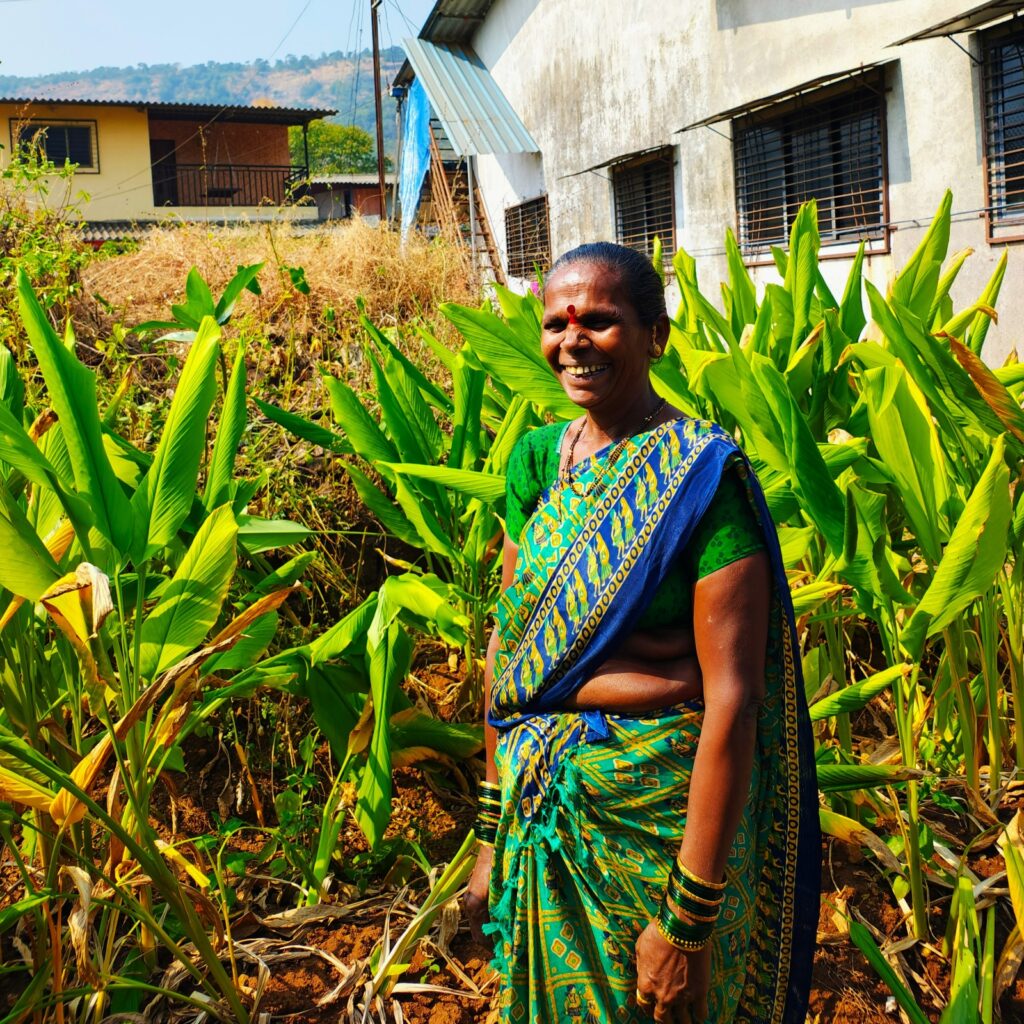
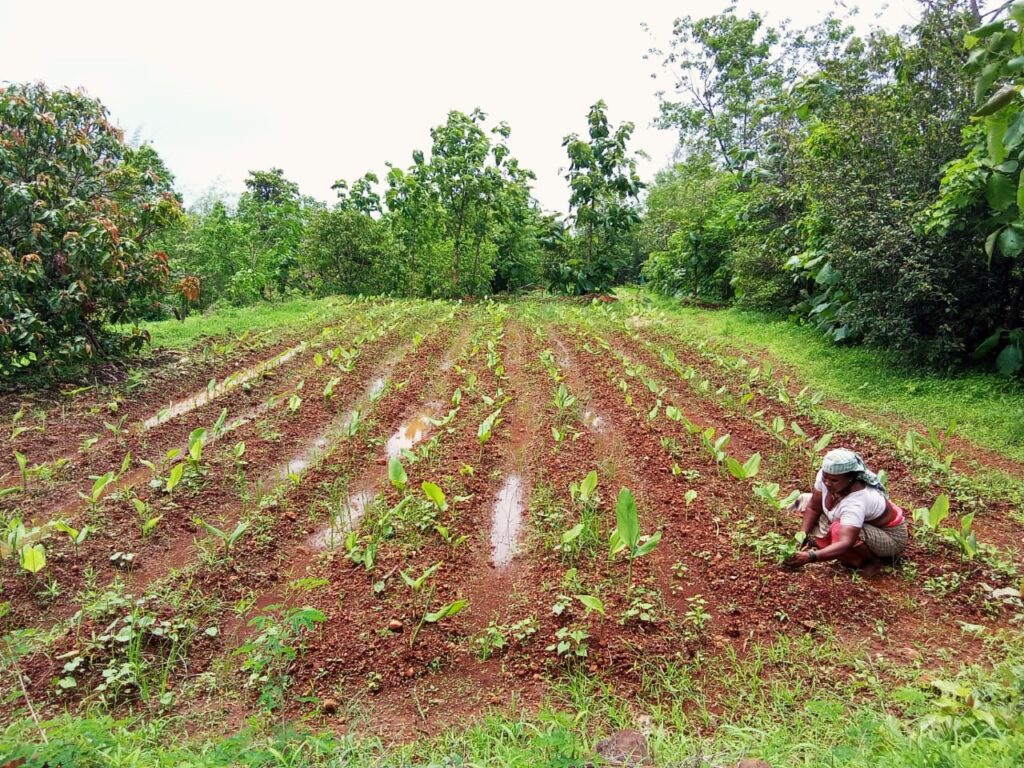
पेण तालुक्यातली दिवाणमाळ गावात सकाळची सोनेरी उन्हं नुकतीच अंगणात उतरलीयेत. अंगणात प्रतिभा मामींची लगबग जाणवतेय. त्यांच्यासोबत अजून १६ जणीची पण. सुखवलेली हळद दळायला दयायची घाई सुरू आहे. किती जुनं नातं हळदीचं. संस्कृतीशी. परंपरांशी. आरोग्याशी. खमंग फोडणी. सण-समारंभ. कापल्यावर रक्ताची धार थांबवणारी चिमूटभर हळद. स्त्रियांच्या जरा जास्त जवळची. एक सृजनशील. तर दुसरी स्वत:च सृजन. परसबागेतली ही हळदीची शेती. शेती पेक्षा सखिच जास्त. घरातली कामं आवरता-आवरता करता येणारी.   छोटेखानी घरामागची आटोपशीर जागा. त्यात साध्या पारंपरिक पद्धतीची हळदीची शेती. कुदळ, फावडयाने जमीन खणून उन्हात चांगली तपवायची. घरगुती शेणखत त्यात आठवणीने मिसळायचं. पावसाची चाहूल लागता लागता मे महिन्याच्या शेवटाला हळदीचे कंद पेरायचे निगुतीने. पाऊस असेपर्यंत पाण्याची चिंता नाही. त्यानंतर जुलै मध्ये तण काढणं. ऑगस्ट मध्ये अजून थोडी मशागत अशी कामं चालू. जानेवारी फेब्रुवारीत हळदीची हिरवीगार पानं पार जमिनीवर लोळतात. सगळा हिरवाकंच साज उतरवून वाळतात. मग पानं छाटून हळदीचे गडडे जमिनीतून काढायचे. गोमूत्राच्या पाण्यात निर्जंतुक करायचे. कौलांवर वाळत टाकायचे. हळदीच्या सुगंधाची कौलं.   हळद पूर्ण वाळली की पोत्यात घालून स्वच्छ करायची, लाकडाने ठेचायची आणि गिरणीत दळून आणायची. ही हळद थोडी घरासाठी ठेऊन बाकीची विकायची. त्यातून येणारं उत्पन्न घरासाठी वापरायचे. या स्त्रियांच्या मुळातच कष्टाळू, उत्साही, जिद्दी स्वभावाला अजून काय हवं? पीक चांगलं यावं यासाठी वैज्ञानिक मार्गदर्शन. नवीन पण सोप्या साधनांची माहिती. त्यांच्या उत्पन्नाला योग्य बाजारभाव. आणि ही मदत ‘राह फाऊंडेशन’ ने केली. राह च्या कृषि तज्ञानी वेळोवेळी या परसबागेला भेट दिली. लागवडी आधीची बीज प्रक्रिया. पारंपरिक पण किफायतदार आशा सरी-वरंबा पद्धतीने लागवड. सेंद्रिय कीटक नाशकं, त्यांची फवारणी, या सगळ्याची प्रात्यक्षिकं आणि मार्गदर्शन राहच्या तज्ञानी नियमितपणे केलं. त्याचबरोबर सेंद्रिय पद्धतिने शेती कारणाऱ्या इतर तज्ञांशीही या महिलाची भेट घडवून दिली. त्यातून बऱ्याच मूलभूत गोष्टींची माहिती मिळाली. विज्ञान, परंपरा आणि ‘राह’चे मदतीचे हात यांचा सुरेख मेळ साधत दिवाणमाळच्या या सतरा महिलानी परसबागेत तब्बल २५ किलो हळद पिकवली. त्यातून त्यांना ४१,०००/- रुपयांपेक्षा जास्त मिळकत झाली. तज्ञांच्या मार्गदर्शनामुळे गेल्या वर्षापेक्षा उत्पन्न जास्त मिळाले. यातून महिलाना प्रेरणा मिळाली. त्यांची तयारी आणि उत्साह पाहून राह ने त्यांना पिकांमध्ये विविधता आणून शाश्वत शेतीकडे वाटचाल करण्याची संकल्पना सुचवली. सगळ्या महिला एकमताने तयार. परसबागे व्यतिरिक्त त्यांच्याकडे असलेल्या साधारण १.५ एकर जमीनिसाठी राह ने वेगवेगळ्या भाज्यांची (वांगी, मिरची, वाल, टोमॅटो) बियाणी पुरवली. तज्ञांची मदत जोडीला होतीच. हळदीचं पीक वर्षाचं तर हे भाज्यांचं पीक छोटया कालावधीचं. भाजीपाल्याच्या शेतीतून ४ ते ५ महिन्यात महिलाना उत्पन्न मिळायला लागलं. या दोन्ही पिकातून २३-२४ साली साधारण १,६५,००० इतकं उत्पन्न मिळालं. या अंगणवाडी शेतीतून महिलांना घरासाठी ताजं आणि पोषणमूल्य असलेलं अन्न तर मिळतच आहे पण अतिरिक्त भाजीपाल्याची बाजारात विक्री करून उत्पन्नही मिळवता येतंय. शेतीमध्ये विविध पिकांची लागवड केल्याने हवामानातील बदलांनाही तोंड देता येतंय. महिलांच्या मेहनतिला अधिक शाश्वत आणि फायदेशीर करण्याचा हा उपक्रम, राह फाऊंडेशन, आता पेण तालुक्यातील इतर गावातल्या महिलासोबत राबवत आहे. २०२२ २०२५ या वर्षात राह सोबत १४० पेक्षा जास्त आदिवासी शेतकरी जोडले गेले आहेत आणि यशस्वीरीत्या शेती करत आहेत. २०२५-२६ मध्ये १८० पेक्षा जास्त शेतकऱ्यांसोबत आमचे काम चालू आहे आणि यापुढील वर्षात अधिकाधिक शेतकऱ्यांपर्यंत हा उपक्रम पोहोचवण्याचा उद्देश आहे. काही अनुभवी, काही सुरकुतलेले, काही नुकतीच हळद उतरलेले हात सुद्धा आता अजून सशक्त, स्वतंत्र स्वयंपूर्ण होत आहेत आणि शाश्वततेकडे वाटचाल करत आहेत. Authored by: Veena Joshi, VP-Communications

परसदारातील शेती: अन्न, उत्पन्न आणि आत्मसन्मान मिळवून देणारी एक साधी परंपरा Read More »

One Problem, Many Perspectives

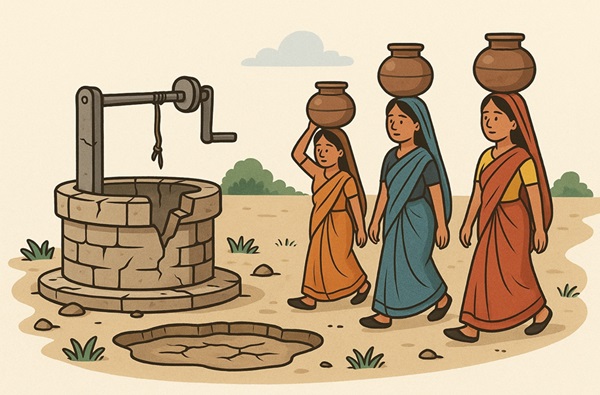
One Problem, Many Perspectives: What Our Research Fellows Learned About Dynamics of Women Power and Water Realities Water is a basic need, but in rural Maharashtra, it remains a daily struggle. For many, especially in tribal belts like Jawhar, Mokhada, and Vikramgad, water isn’t just about thirst. It defines how people eat, work, travel, and dream. During their field immersion, Raah Foundation’s research fellows Shruti, Ritika and Snehal set out to understand this dynamics. What they found was far more complex, and far more inspiring at the same time. An accepted struggle, but a growing shift In many villages, women of older generations have internalized the water crisis. For them, walking miles to the nearest well, waiting hours, or rationing every drop is simply life. But things are changing. A younger generation, some of whom have completed basic education, is beginning to challenge this inherited hardship. They are no longer silent participants in Gram Sabha meetings. They’re raising their hands, asking questions, demanding answers. This shift, our fellows observed, is subtle but powerful. Rooted in Responsible Research The fellows approached this work through a lens of ethical and responsible research. Using tools like Focus Group Discussions (FGDs), structured interviews, and community mapping, they ensured that diverse voices, especially those of women and marginalized groups, were meaningfully included. Sampling was done thoughtfully across villages and age groups to capture overlaps in lived experiences and generational shifts. Quantitative and qualitative data were triangulated for depth and accuracy. Consent and confidentiality was strictly maintained, and findings were validated with Raah for transparency. Snehal inspiringly mentioned, “This wasn’t just research, it was deep listening in action and understanding”. Water Is Not Just a Resource During their time in the field, our research fellows could clearly trace the quiet but steady impact of Raah Foundation’s long-term engagement in these communities. Years of work on water security measures, women-led climate-resilient agriculture had laid the groundwork for visible change. Women who once remained on the fringes of public decision-making were now confidently leading water user groups, voicing their needs in Gram Sabha meetings, and influencing how resources were allocated. What stood out the most was slow but steady shift in self-belief, a transformation Raah had helped seed and nurture through its consistent, community-rooted presence”. A Reflection What began as a field study on water turned into a lesson in leadership. Our research fellows returned not just with data, but with deep respect for the everyday courage of women who refused to let scarcity define their destiny. They reminded us that behind every water drop is a story of effort, and often, a woman who made it happen. This isn’t just water security, but quiet power of women amongst the wordy chaos.

One Problem, Many Perspectives Read More »

Mapping a Greener Future: How Remote Sensing and GIS Are Transforming Rural Development

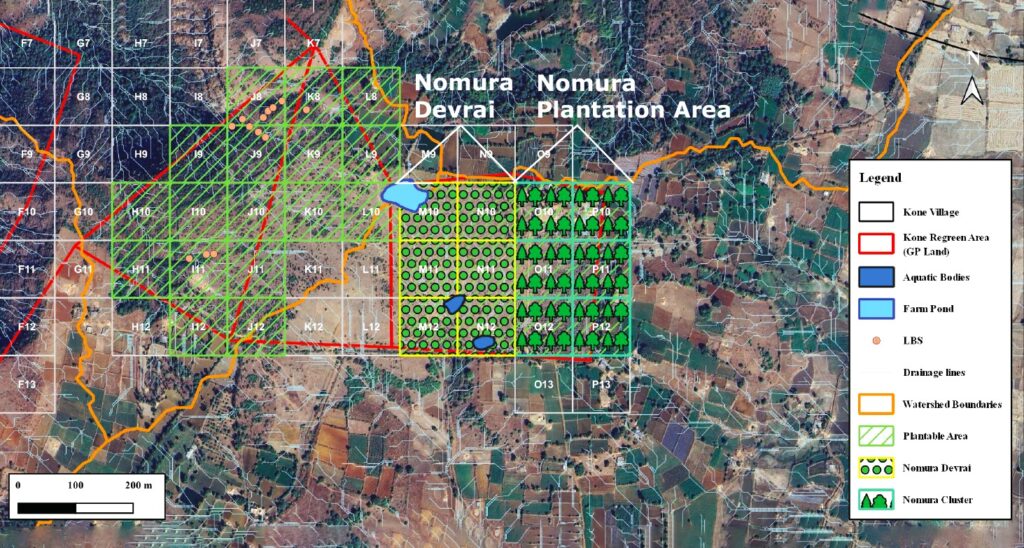
In a world where data drives decisions, knowing exactly what’s happening, where, and how fast has never been more important. That is where Remote Sensing and GIS (Geographic Information Systems) step in—two powerful technologies quietly shaping the future of sustainable development, especially in rural and ecologically sensitive regions. Remote sensing is all about observing the Earth from afar—using satellites that orbit our planet and capture images of the land, water, and vegetation below. GIS, on the other hand, helps us make sense of this massive amount of spatial data by organizing it into maps, layers, and insights. When combined, these tools become a digital eye in the sky and a brain that can decode it all—helping us plan, act, and measure better than ever before. At Raah Foundation, where I work as a Geospatial Specialist, we have embraced these technologies to bring real change to the ground. Our work spans several programs—from ecological restoration under the Regreen Nation initiative to water conservation, agriculture, agroforestry, and rural livelihoods. Each of these areas benefits immensely from the spatial intelligence that remote sensing and GIS provide. So, what does that look like in practice? We use a variety of satellite imagery—starting with freely available sources like Sentinel-2 for land use mapping, vegetation health, and water body detection. We apply advanced image classification methods like Random Forest algorithms (a smart way to teach computers how to categorize land based on training data) to monitor how land cover is changing over time. This helps us evaluate the impact of our interventions—whether reforestation, water conservation, or soil improvement. But our analysis doesn’t stop at free sources. We also integrate paid and premium datasets for greater accuracy and depth. These include topographic maps and CartoDEM elevation models from ISRO, and official maps from the Survey of India, which offer high-accuracy terrain and boundary data. We are even in the process of exploring high-resolution commercial satellite data and drone-based imagery to capture hyper-local details for more effective micro-level planning and monitoring. Using Digital Elevation Models (DEMs) like SRTM and CartoDEM, we conduct terrain analysis—understanding slopes, identifying water flow paths, delineating watersheds, and mapping natural drainage systems. This forms the backbone of our work in planning water harvesting structures like check dams, contour trenches, and gabion bunds. These terrain-based models ensure that our structures are placed not just by assumption, but with precision and purpose. For ground-level execution, we create grid systems—dividing land into manageable square blocks that make planning, implementation, and monitoring far easier. We label and map these grids, highlight key ecological and hydrological features, and prepare village-level base maps, slope and elevation maps, and thematic layers using spectral indices like NDVI (for vegetation health) and NDWI (for water presence). This geospatial approach is now embedded in our Regreen Nation ecological restoration efforts and our Water Support Program, where we help communities conserve and recharge groundwater. It is also critical in supporting farmers with land and resource planning under our agriculture and agroforestry initiatives. We also work on generating reports, impact assessments, and proposals backed with solid spatial data, offering visual proof of change. For example, a before-and-after comparison of vegetation growth or changes in land cover post-intervention. Looking ahead, we are building capacity to use drone-based monitoring, which can capture real-time, high-resolution imagery for better tracking of planted saplings, erosion patterns, and the health of conservation structures. These insights will help scale up our work with even greater precision and responsiveness. Why does all this matter? Because when you are working to restore degraded landscapes, support water security, and improve rural livelihoods, you need more than just good intentions. You need clarity on what exists, insight into what is changing, and evidence to know what is working. Remote Sensing and GIS give us exactly that. They are our eyes in the sky, our decision-making guide, and our accountability tool, all rolled into one. In the coming years, as climate impacts deepen and communities seek resilience, these technologies will be essential to bridge the gap between vision and impact. At Raah Foundation, we are not just mapping one project or one location at a time—we are efficiently applying these technologies across multiple verticals and villages simultaneously, creating a unified, data-driven approach to ecological and social impact. As these technologies continue to evolve, they will become even more essential in shaping a resilient, regenerative, and well-informed rural India.

Mapping a Greener Future: How Remote Sensing and GIS Are Transforming Rural Development Read More »

From Access to Ownership: Rethinking Rural Water Security through WASH in Palghar

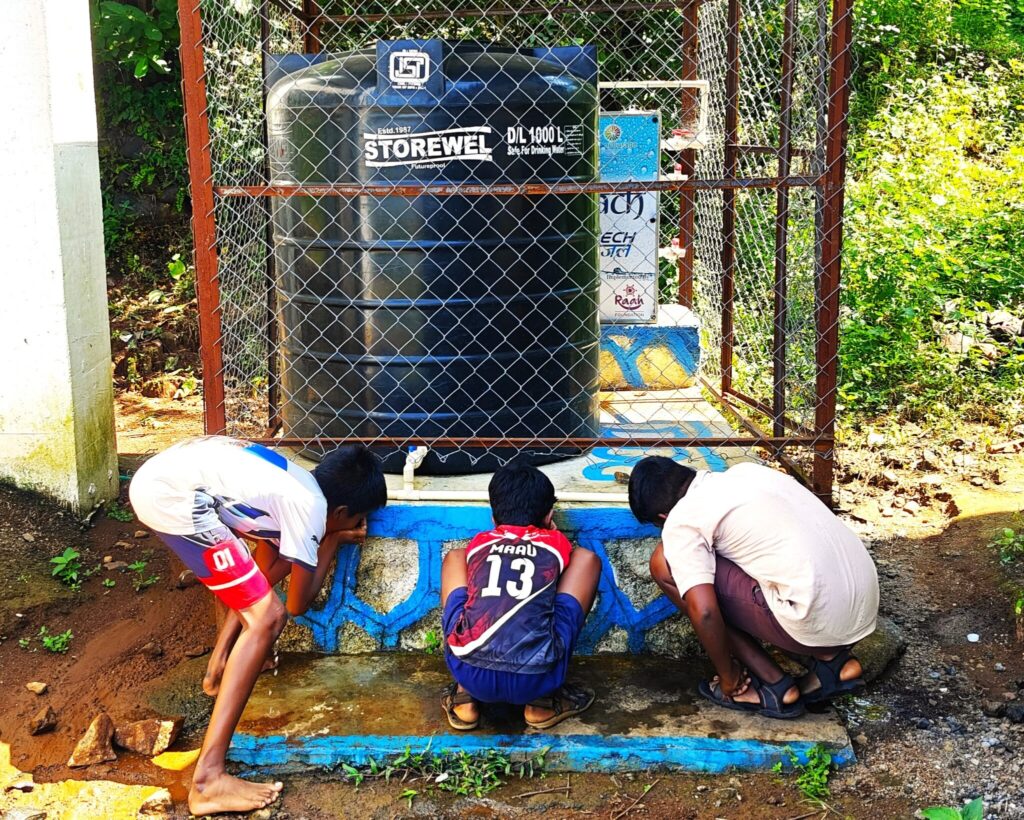
In remote tribal villages like Khand, Kolipada, Uganipada, and Kharpadpada in Palghar district, Maharashtra, water is more than a resource—it’s a daily negotiation for dignity, health, and time. Despite growing infrastructure, water security cannot be sustainably achieved without a cultural shift in how we perceive hygiene, sanitation, and ownership. At Raah Foundation, we’ve come to realize that in the long-term pursuit of water security, hardware alone cannot deliver impact—mindsets do. That’s why, alongside the installation of community-based water filtration units, we implemented an integrated WASH (Water, Sanitation, and Hygiene) training program—tailored not just to needs, but to pace, language, and lived realities. Turning Training into Transformation Our approach was simple, yet bold: start with listening, not instruction. What began as traditional training soon evolved into community-rooted learning spaces. We quickly learned that long sessions don’t work in villages where daily life demands attention. So, we pivoted—breaking the content into short, interactive modules. Games that taught how germs spread. Roleplays that made sanitation visual. Conversations that weren’t lectures, but dialogues. With every session, we moved closer to what we ultimately needed: behaviour change that sticks. Key Pillars of Our Approach: From Practice to Pattern: What Changed? Small indicators began to surface. The Bigger Picture: WASH as a Foundation for Resilience In regions like Palghar, where terrain, remoteness, and climate variability intersect, WASH is more than a health intervention—it’s a strategy for resilience. As climate change increasingly affects groundwater levels and surface water quality, community-driven hygiene and water stewardship becomes our best insurance. What we’ve witnessed is not just a project rollout—it’s a model of scalable, participatory infrastructure paired with human-centric capacity building. The Impact We See Raah Foundation’s Water Governance Committees, known locally as Malhar Samitis, are community-led institutions formed to ensure the sustainable management of water infrastructure and resources at the village level. Established under our broader Water Security programme, these committees are a strategic step towards decentralizing water governance, enhancing accountability, and fostering long-term community ownership. Each committee is structured with clear roles—a Chairperson, Vice Chairperson, Secretary, and five Members—who collectively manage daily operations, water budgeting, and infrastructure maintenance. From overseeing filtration units and ponds to monitoring water quality and maintaining usage records, the committee ensures that water systems function efficiently and equitably. Through regular training and awareness programs, they also act as ambassadors for hygiene, conservation, and safe water practices within their communities. Critically, Malhar Samitis serves as a bridge between communities and local government. By managing village-level water funds, conducting need assessments, and coordinating with public schemes, they enhance the reach and impact of water infrastructure investments. The model reduces dependence on external actors by building resilient, self-governing mechanisms rooted in the local context.In essence, these committees are more than just functional bodies—they are custodians of community resilience, ensuring that water remains not just a resource, but a shared responsibility. The trained committee members will also ensure the use of simple water testing kits, enabling routine water quality checks independently. This will ensure the effectiveness of filtration systems, detect contamination early and take corrective actions consequently promoting confidence and trust in the community regarding water safety Ongoing testing and monitoring form a key part of the water governance strategy, ensuring safe and sustainable access to potable water for all villagers. At Raah Foundation, we believe that real progress is when clean water flows—and communities rise to protect it. Hygiene is no longer just a public health concern; it’s the cornerstone of climate-resilient, dignified living. Because a water purifier alone cannot create health. But a community that understands, owns, and sustains hygiene practices—can. Let’s invest in more than systems.Let’s invest in people-powered change. Authored by: Ms Sadhika Naik, Manager-Operations & Donor Engagement

From Access to Ownership: Rethinking Rural Water Security through WASH in Palghar Read More »

Development Needs Maintenance Too

Why the Social Sector Must Embrace the AMC Model for Long-Term Impact Dr. Sarika Kulkarni, Founder, CEO – Raah Foundation. Introduction: The Gap After the Grant In most programs, the funding ends when the project period ends. So does the attention. What’s left behind is either a burden on communities or underprepared local institutions. Even in participatory models, once the external support leaves, communities often lack the technical capacity or resources to troubleshoot issues, adapt to evolving needs, or sustain innovation. This creates a cycle of “one-off development”where each new program starts from scratch rather than building on or maintaining what already exists. Raah Foundation: A Journey Shaped by Experiential Learning”  Raah Foundation was born from a deep-seated passion—a desire to drive sustainable change and transformation. Coming from outside the development sector, I had little knowledge of how programs were conceptualized or implemented. The pressing question was: How can one ensure that transformation and change are permanent? My education was unconventional. I had two primary teachers: engaging conversations with people—those affected and those already driving change—and sheer observation. By immersing myself in these experiences, I absorbed invaluable lessons that became the bedrock of Raah Foundation. This journey of experiential learning not only shaped my understanding but also instilled the resilience and insight necessary to build an organization committed to lasting impact. One of the most haunting sights I’ve witnessed is the trail of broken promises scattered across our villages—check dams choked with silt, dry wells, defunct borewells, failed plantations, shattered solar panels, abandoned pumps, and forgotten livelihood projects. From Jawhar to Ransai, from Solapur to Jalna—the story is heartbreakingly the same. Every few kilometers, women and girls walk past these lifeless structures, their faces etched with exhaustion and silent sorrow. Their eyes, lingering on what could have been, speak of dashed hopes and daily struggle. It was these moments—these glances—that pushed us to dig deeper and find a better way. Was it an infrastructure problem? Was it a solution problem? Was it a maintenance problem? Was it a problem with the way the solutions were implemented? Was it a people problem? Was there a problem with the community support or buy in? Was it a climate change problem? Or Was it because organizations were doing that they knew the best and funders were supporting what they understood the most? Or Was it wisdom of the visible – limit to conversations about what can be seen and avoid what is invisible. I was getting extremely restless and anxious. Post-project sustainability emerged as one of the most significant challenges in the development sector. Too often, as soon as an implementing organization wraps up or donor funding ends, even the most promising interventions begin to unravel. Through these observations and conversations, I realized that for change to be enduring, it must be community-driven, context-specific, and adaptable. Experiential learning taught me that sustainable development isn’t about imposing solutions but about co-creating them with the communities we aim to serve. The Imperative of Sustained Infrastructure: A Data-Driven Case for Annual Maintenance Contracts (AMC)” Soon it became obvious that locations in Maharashtra were not alone. This was a global problem. Shockingly studies indicate that 30% to 40% of water supply systems in low-resource settings become non-functional due to inadequate maintenance and lack of post-project support. This translates to an estimated $1.2 to $1.5 billion in wasted investments over two decades. (Source: Lockwood, H., & Smits, S. (2011). Supporting rural water supply: moving towards a service delivery approach. IRC International Water and Sanitation Centre). A World Bank review found that 10 out of 21 evaluated projects failed to sustain benefits after completion, despite initial success. ( Source: World Bank ). Globally, tree survival rates in plantation projects without maintenance are often very low ranging from just 30% to 60%, depending on the region, species, and climate conditions. A study conducted between 2012 and 2016 by the Himdhara Environment Research and Action Collective found that only 10% of saplings reported as planted were actually found on-site, with survival rates in some plots as low as 3.6%. In areas like Dera Mandi, only 23% of 6,000 trees survived due to poor maintenance. Conversely, in regions where maintenance was better, survival rates were higher. (Source: Indian Express). The Bruhat Bengaluru Mahanagara Palike (BBMP) reported a survival rate of 64.5% between 2007 and 2013. However, independent surveys by environmental groups estimated actual survival rates between 10–25%, attributing the discrepancy to inadequate maintenance and poor site selection. (Source: Wikipedia) Government audits (e.g., CAG reports) have revealed that the survival rates in India Compensatory Afforestation projects as low as 20–40% in some states where maintenance was minimal. Situation outside India too is not great. A study analyzing tree survival and growth data from 176 restoration sites in tropical and sub-tropical Asia found that, on average, 18% of planted saplings died within the first year, rising to 44% after five years. (Source: UK Centre for Ecology & Hydrology). Large-scale afforestation efforts in China’s arid and semi-arid regions have faced challenges, with survival rates dropping to as low as 15% due to environmental degradation and impacts on soil moisture. (Source: Wikipedia). In the Great Green Wall initiative in Africa, reports show variable success, with some areas reporting less than 15% survival where follow- up care was weak. In Latin America Reforestation projects that were community-managed or NGO-led with minimal post-plantation care saw less than 50% survival in many instances. In contrast, projects with structured maintenance (AMC-like models)—regular watering, fencing, community stewardship, and monitoring—achieve 70–90% survival rates or higher. In another study by The Project Management Institute, observed that many projects fail due to the absence of appropriate sustainability plans, emphasizing the necessity for comprehensive post- implementation strategies. Imagine if all of these projects and interventions were successful and provided the necessary impact? We would have probably met the UN SDGs much earlier and world probably would have been a better place!. Maybe we could have done things differently – we could have paused, observed, analyzed and

Development Needs Maintenance Too Read More »

Our Rivers…Our Future!

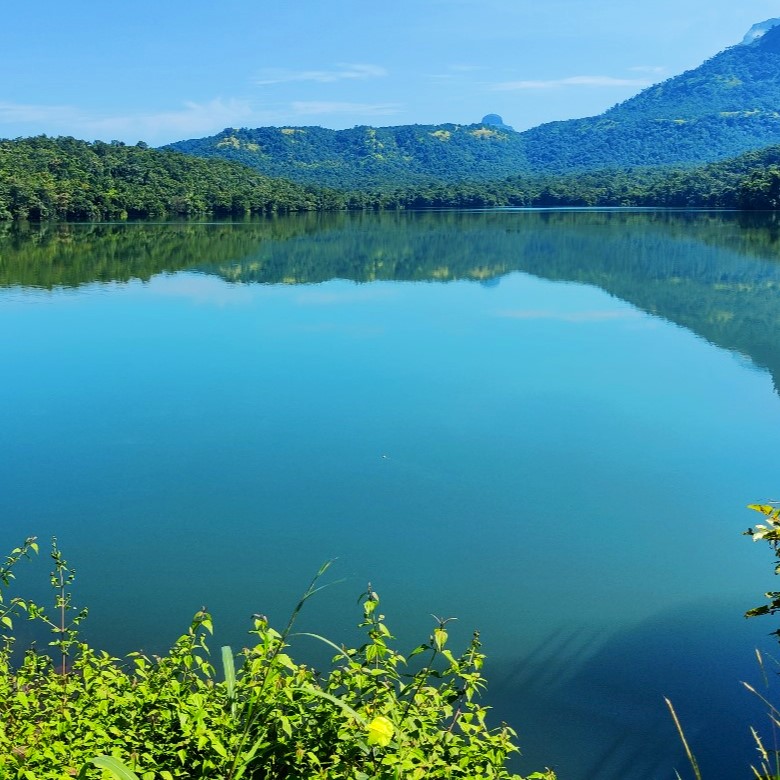
(On the occasion of International Day of Action for Rivers) The Lifeline of Civilization Since the dawn of civilization, rivers have played an indispensable role in shaping human societies. Ancient civilizations, including those of the Indus, Mesopotamia, and the Nile, developed along riverbanks due to the availability of water essential for drinking, agriculture, and transportation. Rivers have served as major trade routes and sources of hydroelectric power while also acting as cultural symbols deeply embedded in religious and spiritual practices. However, with the advancement of industrialization and urbanization, rivers have increasingly faced challenges, including pollution, over-extraction, and significant infrastructural modifications. Deforestation in river catchments, the unregulated discharge of industrial effluents, and dam constructions have severely impacted the ecological health of many rivers, resulting in habitat loss and declines in biodiversity. The ecological and socio-economic crises emerging from river degradation highlight the urgent need for a science-based approach to river conservation and sustainable management. Rivers and Their Basins: Lifelines of Ecosystems and Civilization Rivers and their basins are vital to Earth’s hydrological and ecological systems. A river basin includes tributaries, wetlands, and groundwater that support the river’s flow. These basins regulate water cycles, promote biodiversity, and ensure ecosystem stability, maintaining environmental balance and providing resources for humans and nature. River basins supply freshwater, which is essential for human survival. They provide drinking water to two-thirds of the global population, crucial for sanitation and industrial processes. Freshwater flow maintains public health, reduces waterborne diseases, and supports urban infrastructure. Pollution and over-extraction threaten this vital resource. Additionally, rivers sustain global agriculture. River irrigation supports vast croplands, ensuring food security. Staples like wheat and rice rely on river-fed irrigation, especially in areas with variable rainfall. Without river basins, agricultural yields would drop, causing food shortages and economic instability. Additionally, river sediments enhance soil fertility, increasing productivity and supporting floodplain ecosystems. Rivers are also a renewable energy source through hydroelectric power generation. Many countries generate sustainable energy from river flows, reducing their reliance on fossil fuels. Hydroelectric dams are crucial for electricity, especially in energy-deficient regions. However, careful construction is needed to avoid disrupting ecosystems. Balancing energy production and ecological preservation is vital for river health. Furthermore, rivers play a significant role in climate regulation. Wetlands within basins act as carbon sinks, mitigating climate change impacts and stabilizing atmospheric carbon levels. Rivers also influence regional weather and groundwater recharge. Yet, pollution and climate change threaten these functions, necessitating urgent conservation efforts. Culturally, rivers hold significance. Civilizations thriving along them influence religious traditions and practices. The Ganges, Nile, and Amazon are sacred to millions and serve as pilgrimage sites. However, river basins face strain from pollution, deforestation, and unsustainable extraction. If unaddressed, consequences may include water scarcity and biodiversity loss. Conservation strategies must focus on sustainable management, restoration, and policy interventions to protect river basins for future generations. Interconnection of Biodiversity, Agriculture, and Human Communities with Rivers Flora and Fauna: The Ecological Pillars of Riverine Ecosystems River ecosystems are biodiversity hotspots, hosting diverse flora and fauna, from microscopic organisms to large mammals like otters and river dolphins. Covering only about 1% of Earth’s surface, they support over 10% of known species, underscoring their vital role in global biodiversity. These ecosystems offer critical breeding and feeding grounds for many species, forming interconnected food webs that sustain ecological balance. However, human activities like unregulated water extraction, habitat modification, and pollution have severely impacted many native species. Infrastructure developments, particularly dams, disrupt migratory pathways, causing population declines and extinctions. Moreover, industrial waste and agricultural runoff harm water quality, threatening sensitive aquatic organisms’ survival. The decline in freshwater biodiversity signals ecosystem collapse, highlighting the urgent need for conservation and restoration efforts. Agriculture: The Lifeline of Global Food Production Rivers are vital for agriculture, providing irrigation water to millions of hectares globally. These resources support staple crops like rice, wheat, and maize, which are essential for food security. However, overexploitation of river water for irrigation has caused ecological imbalances. Water withdrawals in arid regions have reduced river flows, endangering ecosystems and aquatic life. Moreover, excessive use of fertilizers and pesticides results in nutrient runoff, leading to river contamination and eutrophication, which disrupts aquatic ecosystems. Soil salinization from poor irrigation further harms arable land, decreasing agricultural productivity. Sustainable practices like drip irrigation and controlled fertilizer use are crucial to mitigate these impacts while preserving river ecosystems for food production and environmental health. Human Communities: Rivers as the Backbone of Livelihoods Rivers provide food, transportation, and economic support for many communities. Traditional fishing societies rely on healthy rivers for sustenance and stability. Historically, rivers have enabled trade and cultural exchange. Indigenous groups, especially in the Amazon, Ganges, and Mekong basins, practice sustainable water management aligned with ecological principles, including seasonal fishing and wetland conservation. However, industrial growth and urban expansion threaten these practices, leading to displacement and economic challenges for many river communities. To safeguard these populations, policies integrating indigenous knowledge with modern conservation strategies are essential for the sustainable coexistence of communities and riverine ecosystems. Rivers: Guardians of Biodiversity Healthy river systems are crucial for global biodiversity, supporting diverse aquatic and terrestrial life. They maintain ecological balance by providing habitats, ensuring species survival, and regulating the environment. Rivers enable species migration, enhance genetic diversity, and facilitate vital exchanges among fish and amphibians, which are critical for adaptation and resilience. Disruptions from dams, pollution, or habitat loss can fragment populations and reduce genetic adaptability. Rivers offer essential ecosystem services, regulating water temperature, filtering pollutants, and stabilizing riverbanks. These services are vital for surrounding landscapes and wetland ecosystems, which support numerous endangered species. Wetlands and riparian habitats are breeding grounds for many species, with connected wetlands acting as nurseries and riparian forests preventing soil erosion while supporting wildlife. Protected areas like the Sundarbans delta and Kaziranga wetlands in India illustrate the benefits of sustainable river management. They aid species like the Bengal tiger and Indian rhinoceros while preserving ecosystems from climate impacts. These examples underscore the need for conservation strategies that balance ecological

Our Rivers…Our Future! Read More »

Digging Deeper into the Dynamics of Sustainable Soil Management

The world depends on soil for around 95 per cent of its food production. Healthy soils can also help achieve six of the 17 Sustainable Development Goals (SDGs) — Goal 2 (Zero hunger), Goal 3 (Good health and well-being), Goal 6 (Clean water and sanitation), Goal 12 (Responsible production and consumption), Goal 13 (Climate action), and Goal 15 (Life on land). One of the fundamental components of healthy soil is organic matter, which is anything that has or once had life, whether it is a microbe or even a plant leaf, stem, or root, etc. Much of our land, however, has insufficient levels of organic matter because of degenerative land management practices, including indiscriminate grazing. Take India, for instance. Soils across the country are deficient in organic carbon, macro nutrients and micronutrients, according to a report by the Centre for Science and Environment (a Delhi-based environmental think-tank).The need of the hour is to boost soil organic matter levels, which reduces soil erosion, improves soil aggregate stability, water infiltration and retention, and shifts more carbon from the atmosphere to the soils, among other benefits. Thus, improving soil health is key to increasing both biodiversity and soil productivity. Nature knows best The good news is that the earth can regenerate itself without human intervention, as we all saw during the pandemic-related lockdown. However, humans can form a critical piece of the ecological puzzle and implement soil regenerative practices that are aligned with natural systems. We have seen indigenous cultures closely work with the forces of nature for thousands of years. We can now combine this traditional wisdom with science to implement regenerative, sustainable, and scalable soil management practices. Rewilding is one such holistic approach that is gaining ground. It means to recreate natural processes as closely as possible and then let nature take the lead in repairing damaged ecosystems and restoring degraded landscapes.After extensive research and learning from some of the best practices followed by practitioners, we created our own model of rewilding. This model was piloted last year on a 10-acre plot. The learnings and challenges were then incorporated before replicating to rewild 112.5 acres in Maharashtra’s Nashik district. Given below are some of the experiential learnings from our model. Five components in rewilding : References :www.fao.org/global-soil- partnership/resources/highlights/detail/en/c/1601298www.cseindia.org/state-of-biofertilizers-and-organic-fertilizers-in-india-11235

Digging Deeper into the Dynamics of Sustainable Soil Management Read More »

Small Drops…Bigger Dreams!

Sakur, Shiroshi, Saturli, and many other picturesque villages, inhabited by the Warli, Kokna, and Katkari tribes, are some of the most draught prone villages in the Jawhar and Mokhada blocks of Palghar District. Mosaic of challenges In the interior villages of #Jawhar and #Mokhada blocks of Palghar districts in Maharashtra, the summer and rains pose their own challenges. Despite being one of the highest rainfall areas, it swiftly transforms as one of the most water scarce landscape. One of the reasons being hydrogeology of the land having basaltic rocks underneath, that doesn’t support water percolation through soil and second being soil erosion causing silt accumulation in the existing water reservoirs like #check dams, hampering their water storage capacities. Few other equally impacting factors are, being tribal communities living by the day, concept of conservation or saving, is non-existent, whether money or water. Heterogenous land ownership also worsens the situation due to inequitable water usage. Families living near the water bodies often abuse water, leaving the families residing far off, high and dry. Plight of despair This critical water crisis posed some of the serious threats to people and the planet too. Families walked around four to five miles a day to a nearby water resource for hygiene and household requirements. 95 % of the communities of this region were forced to #migrate to nearby urban locations in search of livelihoods every year. With no skills at hand, they simply would stand in the labour market and wait for their turn. Out of six days, they would get work for three days and nothing during the rest. While trying to earn income in urban areas far away from their villages and families, they all live on the open pavements and carry rice with them to survive. “During the day we cover our food with all our clothes, bed sheets to protect it from mice or other animals”; says one of the villagers. The story of other villages was not quite different from this. The Awakening When we assessed the villages to identify the details of existing water management and conservation structures, we realised that either they did not exist or were in severely damaged condition causing water leakages rendering them useless within months of rains stopping. We decided to move ahead with strategic approach. Our core principle being ‘Change without Charity’, #communityengagement and involvement always formed the core of our every work. Multiple rounds of meetings with villagers helped us in detailed need assessment. It also helped communities clearly understand the scope of issues and solution perspectives. Systematic discussions and approvals of Gram panchayat members led to establishing the water management committee termed as #MalharSamiti. The Scientific Approach Repairing and building new check dams involved several technical steps to ensure structural integrity and effectiveness. Also rejuvenating other water bodies by de-silting, widening and deepening them was critical part of our approach. Assessment and Planning: We collaborated with #Acwadam as a knowledge partner to conduct a thorough assessment of the hydrogeology of the area to map the aquifers. We then assessed the existing structures for extent of damage, leakages and erosion, or weakness that required repair or reinforcement and developed a detailed plan to improve the supply side water harvesting infrastructure to make the village water positive. Hydraulic Design and Environmental consideration: We also evaluated the hydraulic performance of the check dam, including flow rates, sediment trapping efficiency, and downstream impacts. We adapted environmental best practices into the repair process, to minimizing disturbance to natural habitats, protecting water quality, and preserving biodiversity. Site Preparation: Clearing the area around the check dams and install erosion control measures, such as silt fences or erosion blankets, to prevent soil erosion during construction was the next step. Structural Repair: The majorly damaged or deteriorated components of the check dam were concrete walls, spillways, inlet/outlet structures, and gabion baskets. The eroded sections were replaced and weakened sections were reinforced with concrete, stone, or reinforced soil. Waterproofing and Sealing: The waterproofing materials, i.e. sealants or membranes, were applied to prevent water leakage through the dam structure. The cracks, joints, and seams were sealed to ensure watertightness and prevent erosion or seepage. Reinforcement and Stabilization: Along with the repairs, strengthening of the check dam structures was an important area of work. This was ensured by adding reinforcements of steel bars and mesh to improve stability and longevity. Unity in Action In every village we mapped for work related to check dams, we repeated the same procedure and received amazing support from the villagers. Involving communities, ignited a sense of unity and purpose. With shovels, picks, and unwavering determination, they came together, young and old, to breathe life into the dry check dams. The engineers, experts and communities worked #collaboratively towards construction of new check dams as well as repair of the dilapidated structures. It was a colossal effort, fuelled by the collective will to transform their life. Community participation helped evolve and deploy multiple on-ground solutions leading to honest ownership towards the entire intervention. The Footprints Raah implemented construction and repair & revival of over 65 check dams and over 120 other water bodies creating over 1000 million litres of rainwater harvesting capacity per annum till March 2024 and the work will continue for the coming years for more villages. As the monsoon clouds gathered, a sense of anticipation filled the air. When the rains finally arrived, they filled the check dams to the brim and beyond. The repaired structures held strong, capturing every precious drop. Green Transformation When check dams are restored, they immediately began to mitigate the harsh impacts of erratic rainfall patterns and prolonged dry spells, common challenges exacerbated by climate change. Agriculture, the backbone of rural economies, benefited immensely from the improved moisture content in the soil. Crops could survive longer dry periods, and farmers could afford to plant additional crops, boosting food security and livelihoods. Moreover, the increased availability of water supported the growth of vegetation, contributing to soil conservation and preventing erosion.

Small Drops…Bigger Dreams! Read More »

Harvesting Hope: A Story of Resilience

In the serene yet challenging landscape of Palghar district, in the hamlet of Ramkhind within the village of Pathardi in Jawhar block of Palghar district, Maharashtra, resides Tai Kashiram Bhoye. Coming from a marginalized tribal community, Tai’s story is one of perseverance and resilience in the face of adversity. A Day in the Life Every morning before dawn, Tai Kashiram Bhoye rises with the first light of day. Her home, a modest structure reflective of the simple yet rich tribal culture, shelters her family of eight. Despite the hardships, her love for the land and determination to provide for her family remain unshaken. Struggles and Determination For years, Tai and her community have faced numerous challenges, chief among them being water scarcity and limited access to consistent employment. In addition to cultivating her small plot of land, Tai relied heavily on work provided by MNREGA and other casual labour opportunities. This brought in an annual income of Rs 23,000, barely enough to meet the basic needs of her large family. The Turmeric Transformation This year marked a turning point for Tai and her family. With a half-acre plot of land, Tai decided to cultivate turmeric, a crop known for its resilience and relatively high market value. The decision was bold and required meticulous care and attention.Tai’s hard work paid off, and she managed to harvest a bountiful crop, earning Rs 40,000 from the sale of turmeric. A Brighter Future The income from the turmeric harvest has provided Tai with a sense of relief and hope. She also plans to use a portion of this income to address the health needs of her family, ensuring better medical care and nutrition for her loved ones. The remaining amount will be saved in the bank, a step towards financial security and a buffer for future uncertainties. Community and Aspirations Tai Kashiram Bhoye’s success with turmeric couldn’t go unnoticed in the community. Her story has inspired other farmers in Ramkhind to consider similar ventures, fostering a sense of collective ambition and hope. With the support of the gram panchayat and the shared knowledge within the community, there is a growing movement towards sustainable and profitable farming practices. Tai’s journey is far from over. The challenges of water scarcity and unpredictable labour opportunities remain. However, her success with turmeric cultivation has shown that with determination, innovative thinking, and community support, significant strides can be made. Tai dreams of expanding her farming operations, possibly incorporating other crops, and improving the overall livelihood of her family and community.

Harvesting Hope: A Story of Resilience Read More »